
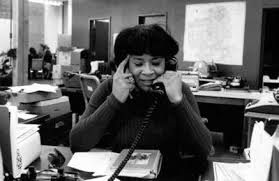
As a young Black graduate, it wasn’t particularly easy for me starting out in the field of Journalism. I received a fair share of rejection letters before I landed my first unpaid work placement with a national newspaper.
And as excited as I was about the prospect of entering a newsroom for the first time, I was instantly struck by the uncomfortable truth of how ‘hideously white’ the dream career I was about to pursue was.
Back then, news and feature stories reflecting the lives and experiences of Black people and ethnic minority communities rarely made it into print. Instead, they remained neglected on desktop folders for weeks on end labelled as unpublished.
The limited scope and interest in reporting stories reflecting Black and ethnic minority communities was a huge disappointment to me because it wasn’t what I expected, and at times it left me feeling isolated and excluded.
Any mention of slavery, colonialism and racial discrimination was often frowned upon by news editors and journalists alike. And while Black on Black crime often made the headlines, news items reflecting Black people in a positive way or in a position of power remained absent and often considered not newsworthy.
Twenty years on from my early journalism experience, and I don’t feel like much has changed in the way that Black and ethnic minority communities are represented in news articles and on our television screens. Unfortunately, there is still a tendency to misrepresent Black people of African descent and there remains an overwhelming focus on unpleasant aspects such as criminality and violence.
The eventful summer of 2020 introduced a new phase in the history of Black Britain, playing out in protest on our streets and represented in the media. It was The USA killing of George Floyd- a Black man killed by a white police officer- that instigated worldwide protest led by the Black Lives Matter movement who fundamentally called for systematic change.
An overt interrogation into Britain’s colonial past left no stone upturned, with more people from all walks of life, engaging in debate and real discussions centred on issues of slavery, colonialism and its legacy.
Since then, there’s been a gradual but evident increase in popularity of more positive and refreshing media portrayals of Black people in varied and new roles on our television screens.
This has filtered through the conscience of some media companies, such as The Guardian newspaper that launched an investigation into the paper’s role and ties with slavery, subsequently publishing a newsletter titled Cotton Capital– a six-part audio series that explores how transatlantic slavery shaped the Guardian, Manchester, Britain and the world.
With the harsh realities of the legacy of slavery being gradually exposed, calls for the British government to apologise for its leading role in the transatlantic slave and for repatriations for the ancestors of the enslaved have take center stage.
It’s hard to fathom that when slavery ended, unlike slave owners, no compensation was paid to the formerly enslaved, instead they were left to fend for themselves and their families with very little or no financial means. In some cases, the means were obtained from a harsh apprentice system that closely resembled the practice of slavery.
Other areas magnified by Black Lives Matter protests saw calls for better policing among Black communities and further calls in education to decolonise the curriculum with a growing number of historians trying to change this mythical storyline.
The university of Liverpool announced the renaming of a dormitory commemorating prime minister William Gladstone, son of a slave owner, who in his maiden parliamentary speech, argued in favour of compensating slave owners for emancipating slaves. Other improvements can be seen in the examples of renaming street names and schools. Oriel college’s governing body voted to remove the controversial statue of Rhodes, but four years earlier had affirmed keeping it in place.
Today, it is more openly recognised and understood that a diverse newsroom brings together unique perspectives and experiences and more so, an informed and better understanding of different cultures, which leads to more balanced and nuanced reporting.
Diverse newsrooms have the authority and a responsibility to break stereotypes and to challenge traditional narratives. Furthermore, it’s easier to build trust with an audience when they see themselves represented in a positive way.
According the NCTJ (National Council of Trained Journalist) in 2022, data revealed that 88% of persons employed as journalists or newspaper editors in the United Kingdom were white.
Although there has been an increase in the proportion of journalists coming from other ethnic groups, 12 % in 2022 compared to just 6 % in 2018, there is still a low proportion of other ethnic groups in editor positions.
While the figures indicate that representation has improved since I started out in the field of journalism some twenty years ago, there is still plenty of room for improvement in newsrooms across the UK.
Diverse communities should be reflected in news stories; there should be more diverse and inclusive newsrooms across all levels of operation and in managerial positions too. Building audience trust is paramount if we are to make news organisations more popular and welcoming to young Black graduates wanting to fulfil a dream career in the media and journalism more specifically.