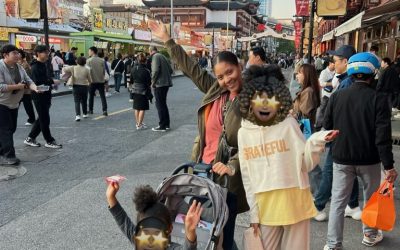
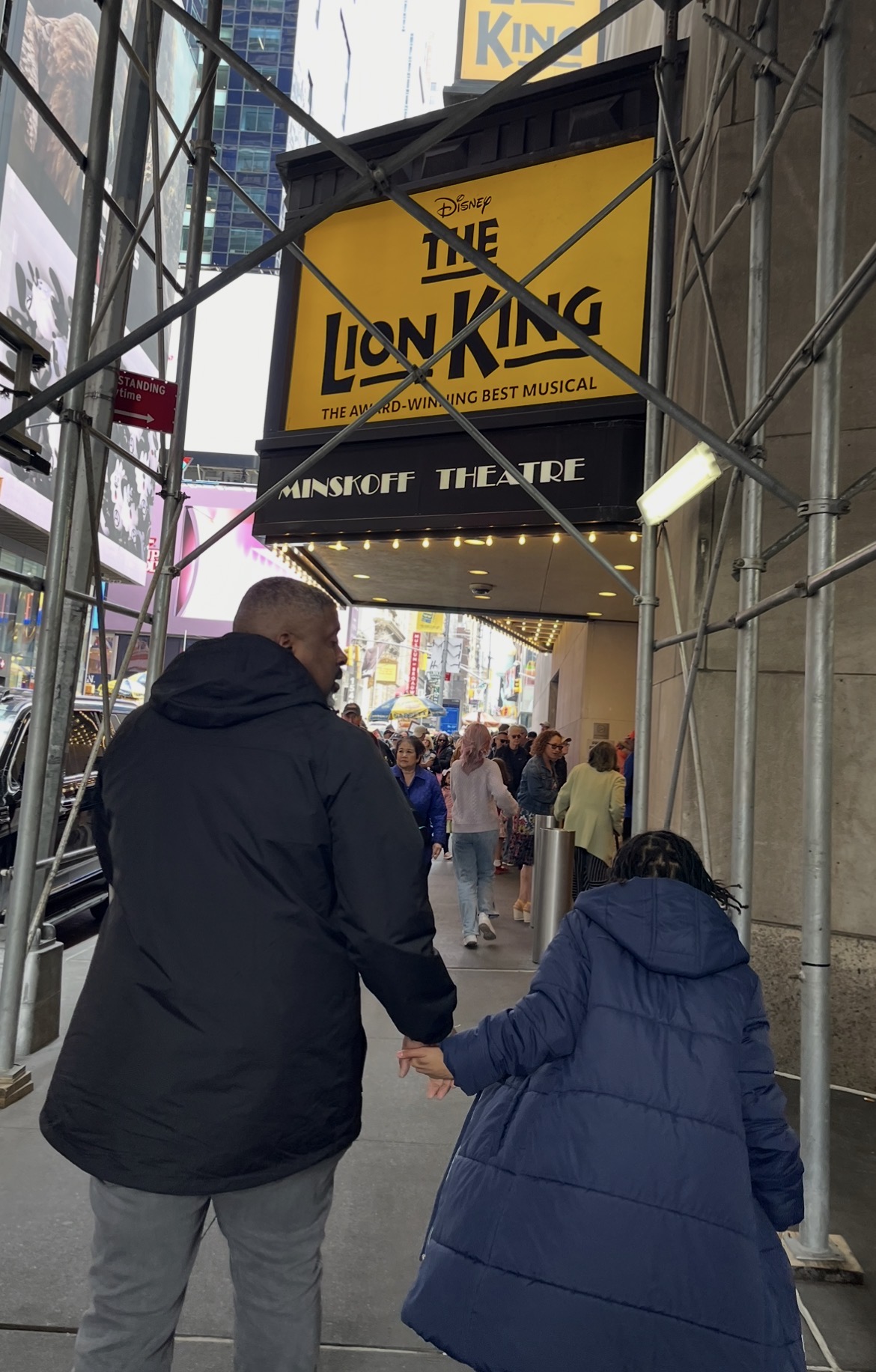
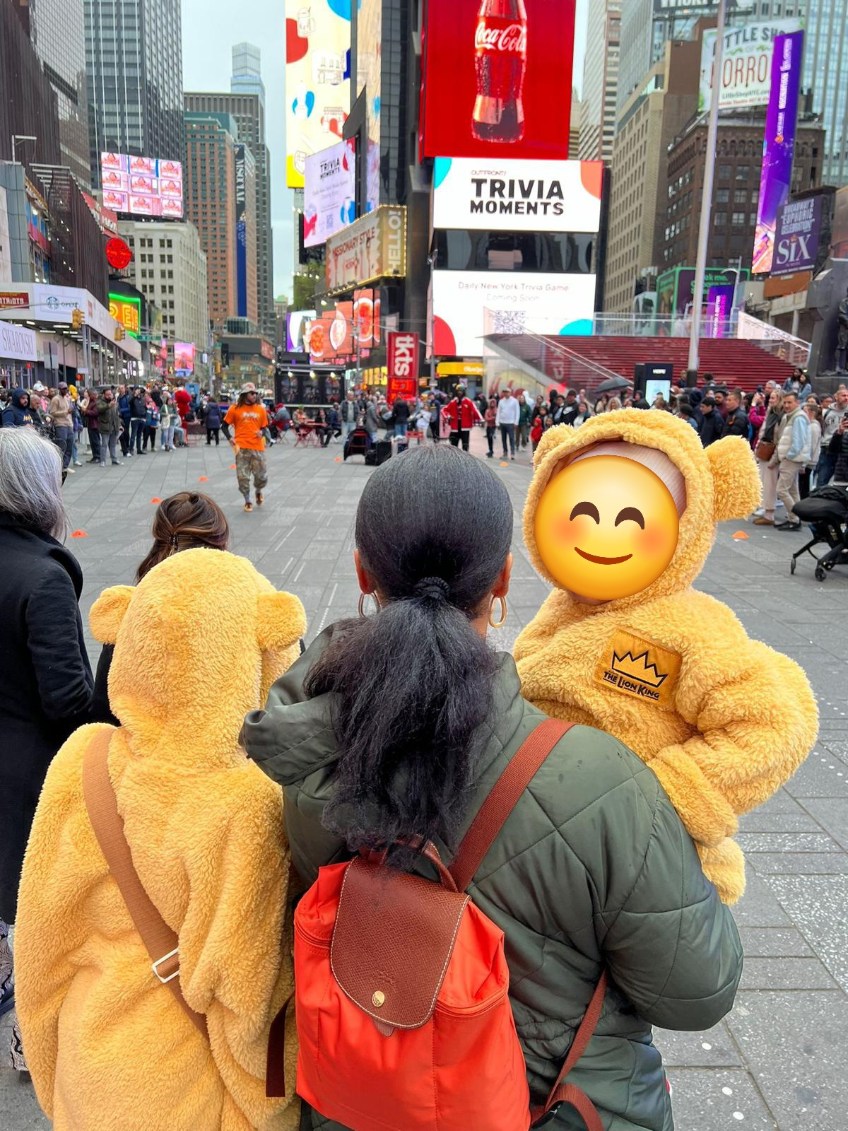

Travelling to New York City as a family felt like the perfect way to celebrate my 41st birthday. I was excited to explore what one of the greatest cities in the world had to offer, and eager to fulfil a jam-packed to-do list during a short and special stay.
From an adrenaline pumping shopping scene, to acclaimed museums, and lush green space of the renowned Central Park, to the unforgettable Broadway theatre shows, we were simply spoilt for choice in this fun-filled city that never sleeps.
What struck us most about The Big Apple, was its incredibly culturally diverse make-up, and its culinary attempt to pretty much suite all taste buds- with some of the best niche and exquisite restaurants and eateries around.
But with Black history and culture attractions at the top of our agenda, we soon learned that it wasn’t easily recognisable in NYC, (particularly in lively areas such as the commercial district of Times Square, where glitzy billboards dominated the landscape) despite it being one of the most diverse cities in the world, and with one of the largest populations of Black residents in America.
However, the good news was that in just two days we were able to locate some of the great points of interest that would enlighten us about the African American experience, past and present, in New York City.
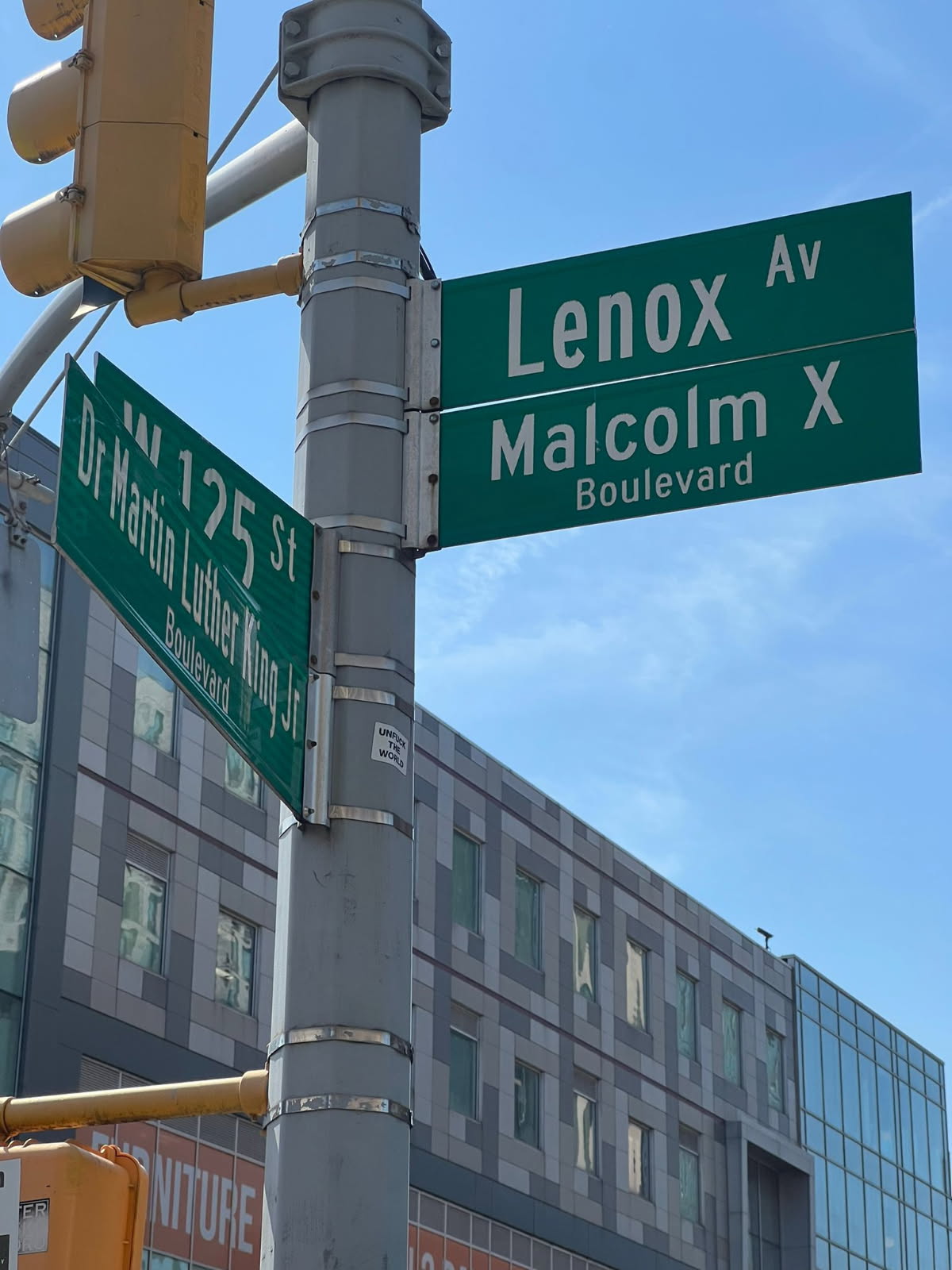
Our first stop was Harlem- once a predominately Black neighbourhood- which was just a 20-minute taxi ride from downtown Manhattan. On arriving in this diverse neighbourhood, the swanky eateries and modern coffee shops were clear indications of how gentrification has transformed the area. Nevertheless, it didn’t take us long before we spotted several green coloured street signs displaying the names of heroic African Americans, such as Malcom X Boulevard and Fredrick Douglas Boulevard.
Dating back to the early 20th century, The Harlem district is well documented as a capital of African American cultural life and heritage. And today it is evident that the region proudly retains a vibrant reputation and is still a popular meeting spot for African Americans to socialise, work, eat together and support Black owned businesses like jazz clubs and soul food institutions-which all create a real community buzz in the neighbourhood.
So, if you’re out and about in New York and keen to explore Black History and Culture, here’s a list of 10 (there’s plenty more) top distinguished points of interest that celebrate the contributions of the Black community to the City’s culture. I hope you enjoy your stay as much as we did!
The iconic Apollo Theatre
Once the birthplace of African American entertainment and a symbol promoting Black cultural awareness during the 1930s. Some of the great stars who began their road to stardom on the Apollo stage included Ella Fitzgerald, Billie Holiday, James Brown and Luther Vandross, and more recently comedians Tiffany Haddish and Keven Hart. Today, the theatre host live concerts and open new space for shows and exhibitions.
The Harriet Tubman Memorial Plaza
Located at Frederick Douglass Boulevard in Harlem. Is a grand bronze figurative sculpture of Harriet Tubman. The structure stands as a reminder of Harriet Tubman’s heroism and pays homage to the abolitionist and humanitarian who led countless enslaved families to freedom during the 19th century.
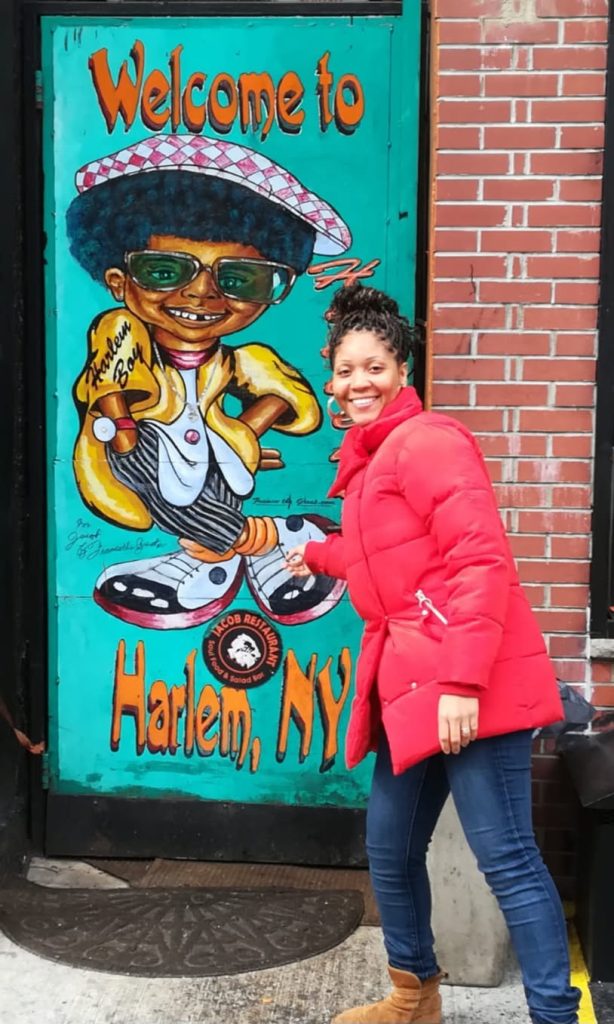
Jacobs Soul Food Restaurant
Within the strecth of 129st and Malcolm X Blvd. I highly recommend this restaurant in Harlem. Simply one of the best soul food restaurants I’ve been too in a long time. It’s a casual walk-in restaurant with no reservation and a wide selection of succulents, meats, fish and vegetarian dishes. The staff were also pleasant, with space to dine in or take out. All dishes are very reasonably priced too.
Langston Hughes House
Located at 20 E. 127th St. in Harlem. For 20 years the author and social activist Langston Hughes, was a key player of the Harlem Renaissance. In 2019, his once home was awarded a National Trust for Historic Preservation grant through the American cultural Heritage Action fund. Today it is open to the public as a historic house museum. Famous works penned at his home include I Wonder As I Wander and A Pictorial History of the negro in America.
The Duke Ellington Statue
On the northeast corner of Central Park commemorates the life and legacy of one of the most legendary composers and musicians in the history of modern music. Duke Ellington was a key figure in New York City during the 1920s and 30s where he was famously known for his performances at the iconic Cotton Club located in Harlem. It’s one of the most unique and interesting sculptures as the structure is elevated on a tall plinth making it visible from a distance.
The Schomburg Centre for Research in Black Culture
Located on Malcolm X Boulevard in Manhattan. The Centre is devoted to collecting and preserving documents that reflect the experiences of people of African descent throughout the world. The large building, ensures the preservation of more than 5 million items, including recordings, photographs, prints, and manuscripts.
Shirley Chisholm Circle in Brower Park, Crown Heights
At Brower Park in Crown Heights, a commemorative plaque acknowledges the life and achievements of Shirley Chisholm, the first Black woman to become elected into the United States congress and the first Black woman to run for US presidency.
The Malcolm X and Dr. Betty Shabazz Memorial & Educational Centre
An educational and cultural centre dedicated to the legacy of Malcolm X and Dr. Betty Shabazz. The centre was previously known as the Audubon Ballroom, a theatre, dance hall and weekly meeting locale for the Organization of Afro-American Unity, founded by Malcolm X. It was here, too, that the activist was assassinated while giving a speech in 1965.
Hunts Point Slave Burial Ground
If you’re feeling a little more adventurous and curious, why not visit this lost slave burial at Oak Point Ave. the Bronx, where there is said to be 10 to 40 enslaved African descendants buried at this ancestral site. The site was discovered in 2014 by students and historians at Drake Park in the Bronx.
Exploring Black-Owned Flatbush
The go to place for black history and culture must be Flatbush, a neighbourhood in the New York City borough of Brooklyn. There’s a real melting pot of black culture that comprise this exuberant neighbour, with music and flavoursome food smells that fill the air, different languages spoken and flags from every Caribbean country in apartments and shop windows and Flatbush. There’s an evident strong connection to the Caribbean in this district, nicknamed Little Caribbean. that you may feel transported to your favourite Caribbean destination.
I know there are so many more Black history hit spots in NYC! Please share with us in the comments section any recommendations for our next visit!